Yggdrasil Urban Wildlife Rescue Center
Welcome at » 2007 » March

This hawk was found in East Oakland, sitting in a backyard on the ground. The residents who found him didn’t know who to call to report that he was in trouble so they watched him for a couple of days while they hunted for a contact number for someone who could help. By the end of day two they had been given my phone number and spoke with me.

The hawk had been on the ground for the first couple days. he then was able to jump/fly up to the fence and then into a tree. When I spoke with the residents, I expressed concern because I do not have equipment to retrieve birds from trees and it was already so late in the day that it was getting dark. We hoped he would be OK til morning and agreed to talk the next day.
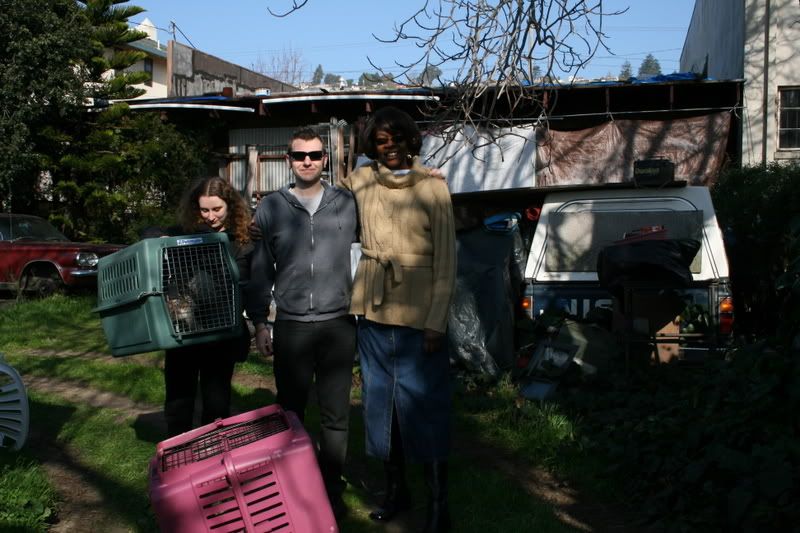
The following day the Hawk had managed to climb up to the rooftop of a warehouse. The residents banded together and agreed to take action to save this hawk. They got into the warehouse, went up to the rooftop and threw a blanket over the hawk. The hawk flipped onto his back, in a defensive posture and grabbed the blanket with his very sharp talons. The residents were able to then bundle him up in the blanket and get him safely into a carrier. They called me and I went to pick him up and get him to the Vet.

Montclair Veterinary Hospital treats all our wildlife patients, squirrel and hawk alike. They examined our hawk and found him to be malnourished and with a compromised wing. He needed cage rest and to be fed up.
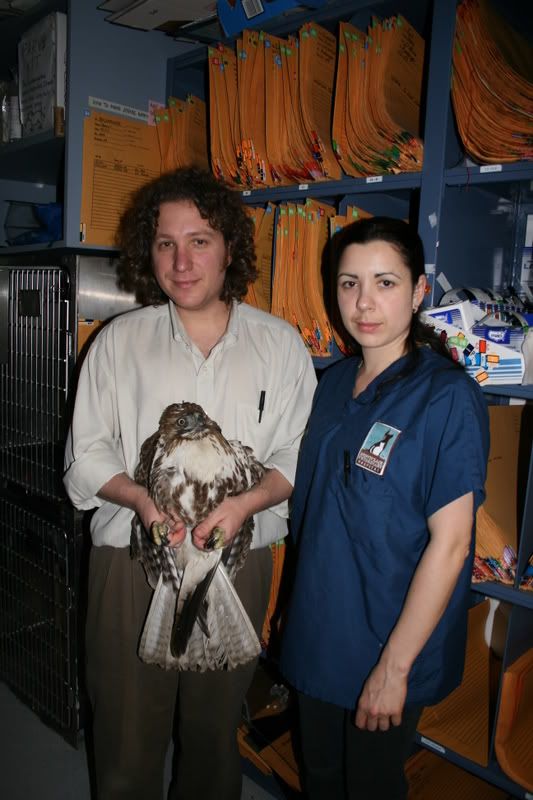
During his cage-rest, we determined that his wing was broken. He had a head injury and swelling, and one of his toes was also broken. 2 weeks of cagerest and regular meals did wonders for his recovery. He was ready to try flying again so he was moved to the OHS wildlife center in Fremont. They have an excellent flight cage and caregiver, David, at OHS Wildlife. The hawk had another thorough exam. His wing was Xrayed and was healing well. 2 weeks later he was ready for release!

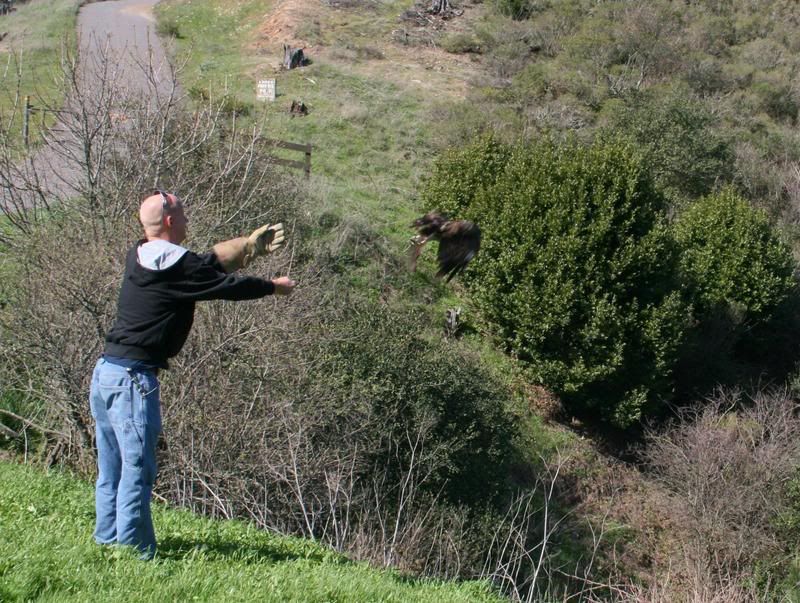
He was driven back to Oakland and released in an area close to where he was found.

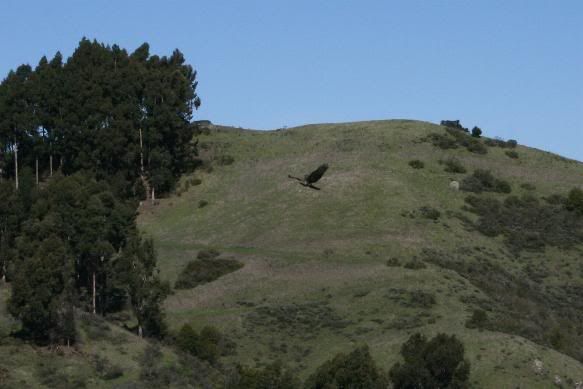
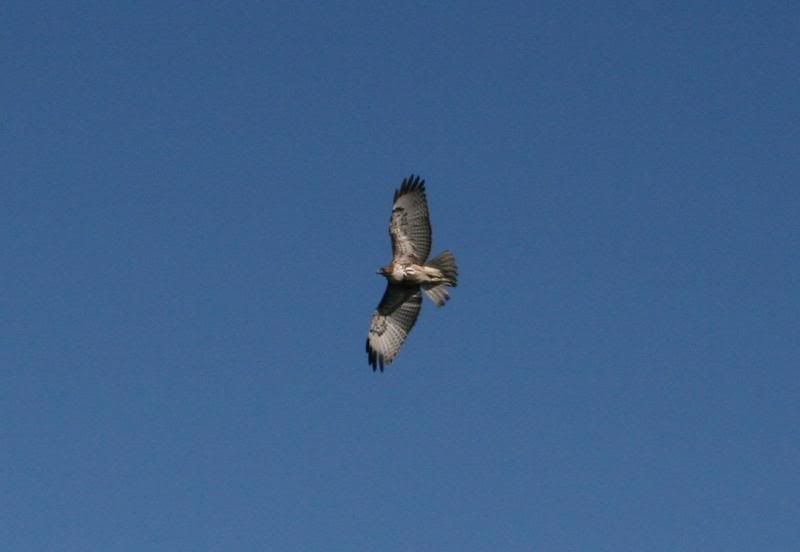
He flew over the hills, up the air currents, higher and higher with obvious delight at his freedom and ability.
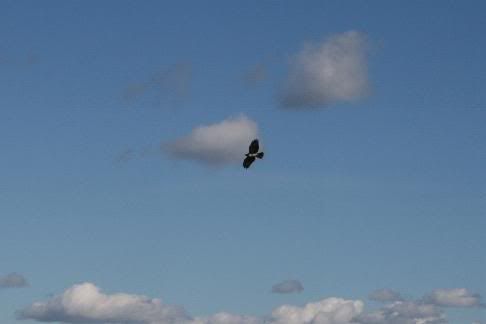
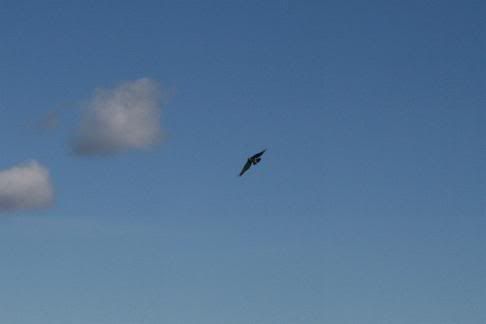
We feel confident he will live long and well now that he is recovered.

Thank you to A.J and the Residents of 79th Ave, who saved this beautiful bird. Thank you to Montclair Veterinary Hospital for treating him. Thank you to Jenny and Diana and Lois for ongoing support and advice. And Thank You to David Anderson (and OHS Wildlife) for his 24/7 dedication and care.
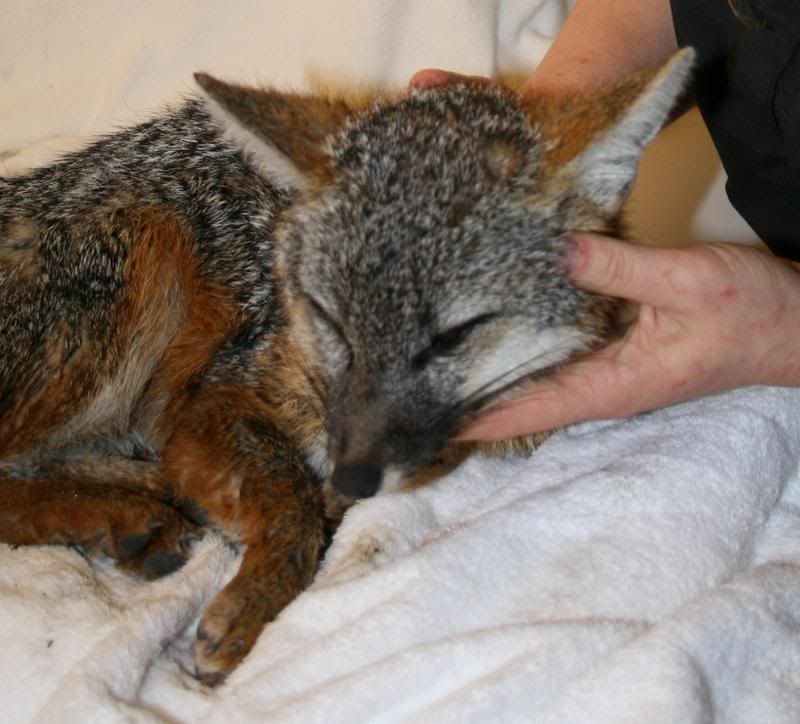
On February 6th, we were referred a call from Wildcare of Marin, from a woman in Albany who had been watching a Grey Fox behave oddly and had been able to wrap he fox in a blanket and put him in a box to get him into care. She drove to us in the middle of the night to bring us this beautiful fox.

The fox was lethargic, dehydrated, and in really bad shape. We were concerned that it was either distemper or poison. Foxes do occassionally get rabies but it is so rare and the symptoms were wrong for it, that we were not concerned.

Angela, our head vet tech, came to the center at midnight to help with the fox. She consulted with the veterinarians from Pet Emergency in Berkeley, and proceeded to give the fox IV fluids and care which saved his life. We also began treatment for Rat Poison, in case it was that. We felt confident to stop at 5am and went to get some rest.

At 8am I drove the fox to the Montclair Veterinary Hospital, where a blood panel showed that he was indeed toxified. Distemper was still a possibility but we continued treatment for the poison nevertheless.

The fox was responding. The signs of warfarin poisoning were receding ( red speckled gumline, colapsing veins, slow clotting ) He was standing up and eating (ravenously) and even hiding food in his cage for later.

At one point, he took interest in a nectarine and buried it in the corner of his cage, making a big mess of his blankets. I waited til he was asleep and retrieved the nectarine, placed it back into his food dish and straightened the blankets again. No sooner had I removed my arm then he woke up. grabbed the recently replaced nectarine from his food dish, and proceeded to bury it again but this time he lay on top of it to prevent me from retrieving it!
What a funny guy!

Despite his seeming recovery and response to the rat-poison treatment, about 72 hours after intake, he died from the poison.

Everyone here at the wildlife center was touched by this amazing creature who came to stay with us. His death, despite our best attempts to save him, brought up many issues which needed to be investigated. Here is what our researched revealed:

This fox lived in an area that was surrounded by the Sunset View Cemetary, and Saint Jermone Church and Elementary School. Often, rodent bait boxes are placed around areas such as these to control mice and rats who are attracted to food and garbage left around the premises. Animals such as foxes, raccoons, opossums, hawks, and owls, eat mice and rats. They are the natural predators of these animals. If a mouse or rat goes into the poison bait box, eats the poison, leaves the box, goes out and get caught by any of these natural pest controllers, the predator animal has just eaten a baited meal and has been poisoned.

Now-a-days, poison-makers are using something called “Super Warfarin” for rat bait because rats and mice have become resistant to the original warfarin products. These “super warfarin” poisons are much harder to reverse and an animal poisoned with these “Super warfarins” are less likely to respond to treatment.

Our fox died from secondary super-warfarin poisoning.
He did what all good foxes should do, and ate mice and rats. Unfortunately, these mice and rats were sick with poison from the bait boxes laid out at the Sunset View Cementary or Saint Jermone Church and Elementary School.

This is an unfortunate cycle because we are killing the natural predators of the pest animals we don’t want around. The rodents will become resistant even to the super warfarins eventually but the predators, the natural rat and mouse controllers, will die.

What can You Do?

If you want to help, perhaps a letter to the Sunset View Cemetary asking them to stop using Rodent Bait would help.
Sunset View Cemetery - P.O. Box 187 El Cerrito, CA 94530

A letter to the Saint Jermone Church and Elementary School would also help. St. Jerome Catholic Church, 308 Carmel Ave., El Cerrito, CA 94530

Saint Jerome Elementary School 320 San Carlos Ave, El Cerrito CA. 94530

Also, there is new legistlation in comment period right now regarding the restriction of certain types of rodentcides due to frequent secondary poisoning problems for endangered and other wildlife birds and mammals who eat rodents. If you feel strongly about this, please express your views to the committee by email or letter. Thank you! http://www.fedcenter.gov/Articles/index.cfm?id=6409&pge_id=1854

You can read more about it here: http://www.defenders.org/releases/pr2007/pr011707.html


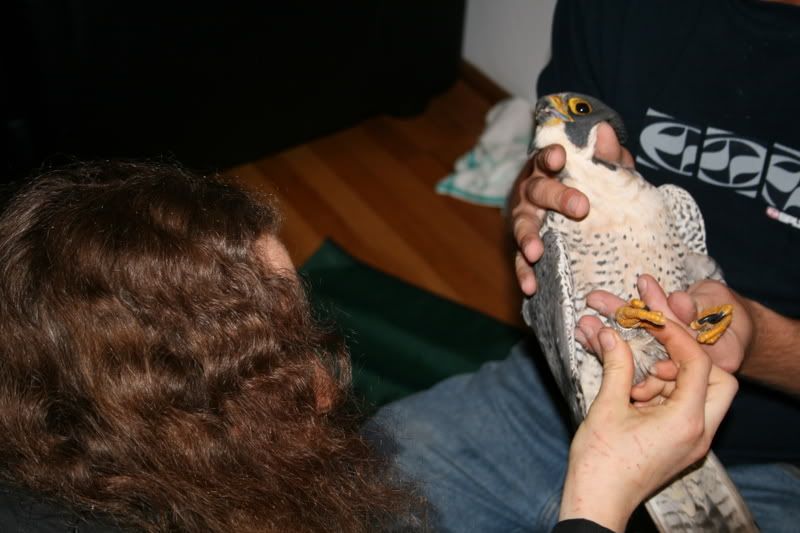
Today a Peregrin Falcon was resting on a rooftop in Oakland near Lake Merritt. It was unable to fly for any distance and was going from Rooftop to rooftop, in obvious distress.

After tracking the peregrin all afternoon, I lost sight of him and went home to rest and wait for the inevitable call.

The call came at 9pm from John Gordon. A Peregrin Falcon is sitting on my doorstep and not moving.

I called David from OHS Wildlife we and went to help the bird.

The entire event was filmed by the Rescuer, John, and he later posted it on YouTube for all to see.

Enjoy!

http://www.youtube.com/watch?v=Wnb-kJ-7pnQ

Peet’s Coffee in Castro Valley, held a Holiday Fundraiser to support our work. They donated the proceeds from all fresh coffee sales and tips on Christmas Eve at their store. And to make matters even better, the Corporate Office of Peet’s then matched the amount, making the total donation amount just over $1,500.00 ~ That will buy a lot of baby formula, food and medications for our wildlife patients.

Thank you to Peet’s Coffee and those who participated in this event.

Once again, Abby, and the wonderful volunteers from OneBrick.Org came through to help our wildlife center by building new pens for our recovering wildlife patients.

Thank you so much for your support!

globalwarming awareness2007